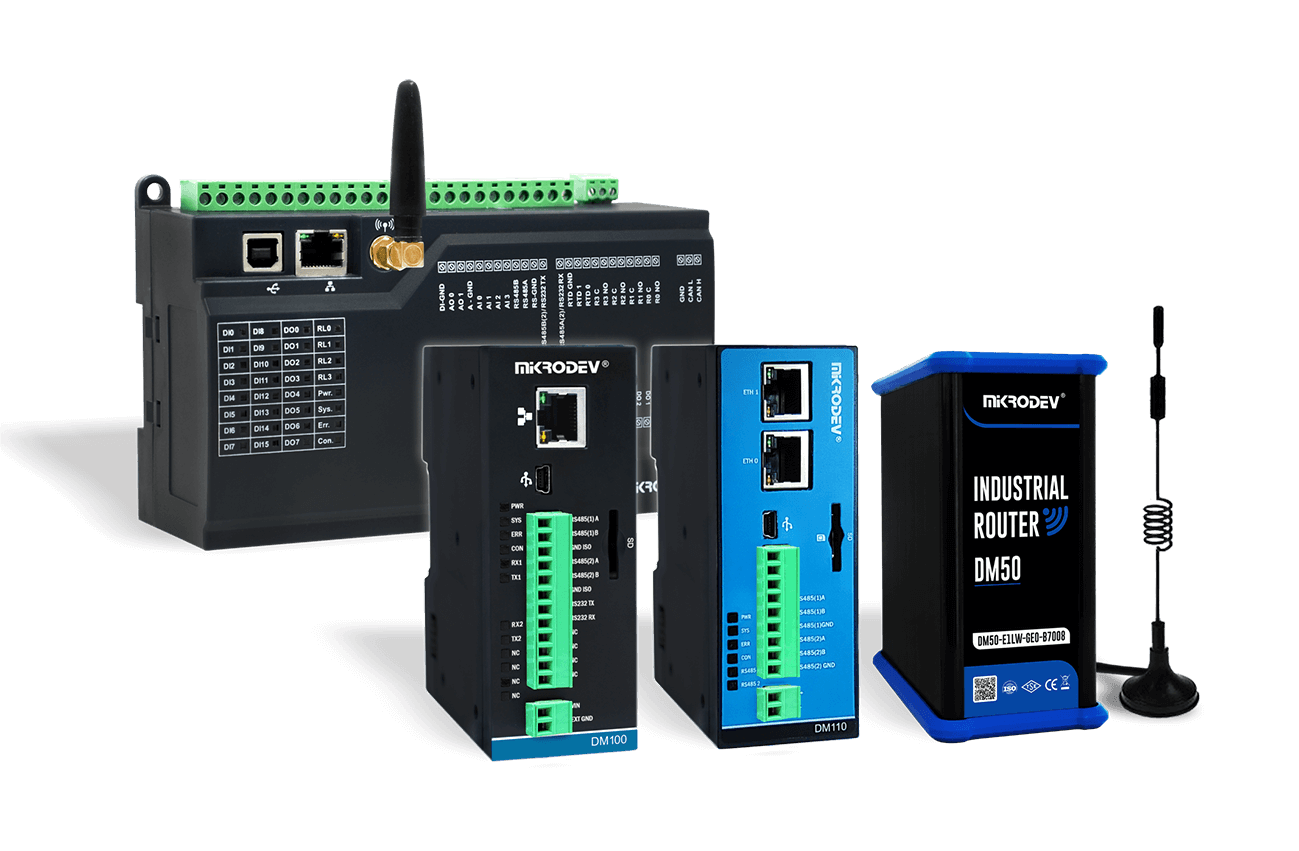

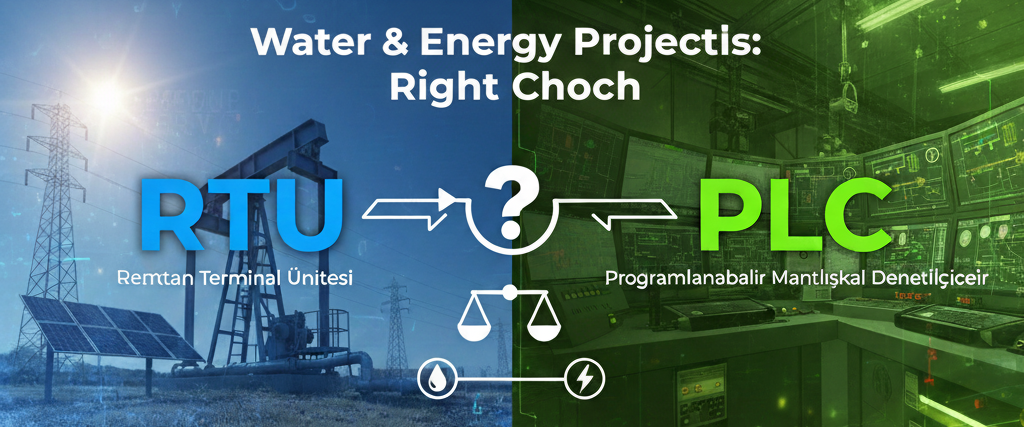
When you go out to the field, the picture is usually the same: distributed stations, pumping stations, reservoirs, substation yards, and at every point the same question arises: “What should we use to collect data from this station, and what should we use to control it?” On one side there is the RTU, on the other the PLC. Both are automation devices, but they do not do the same job. A wrong choice often comes back as endless communication problems in the field, unnecessary panel costs, or alarms that operators do not trust.
In the water sector, the work is usually referred to as water SCADA, while in the energy sector it is substation SCADA. In both worlds, the goal is the same: measure, monitor, and intervene safely when necessary. By the end of this article, you will be able to approach the question “which is more appropriate for which project” with a clear framework in terms of scope, cost, reliability, and maintenance.
What Are RTUs and PLCs, and What Do They Do in Water and Energy Fields?
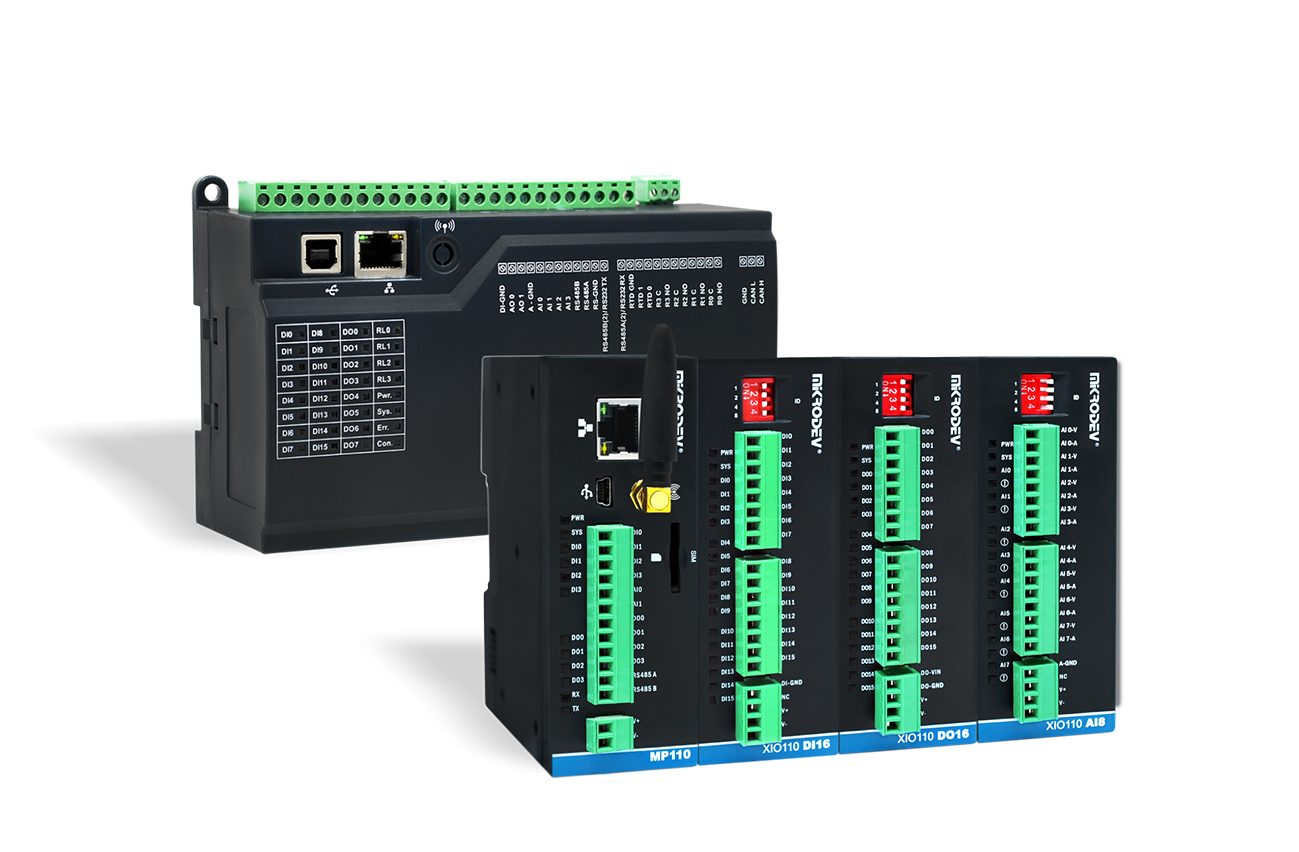
An RTU (Remote Terminal Unit) can be thought of as an edge device focused on collecting signals from the field and transmitting them to the control center. Its strongest area is telemetry—collecting data from remote locations, generating alarms, recording events with timestamps, and delivering this information to SCADA in an orderly manner. The design philosophy of RTUs is built around the reality that “communication can drop at any time,” which is why mechanisms to reduce data loss are commonly included.
A PLC (Programmable Logic Controller), on the other hand, is essentially a controller designed to control the process in the field in a real-time and deterministic manner. It reads inputs, executes logic, and drives outputs. It is very strong in fast scan cycles, PID control, sequential operations, and interlocks. In short, the PLC is the component that “makes the process happen” in the field.
The critical distinction here is this: the approach of “both are automation devices, let’s choose whichever is cheaper” usually fails in the field. Because the choice is not just about the device; communication infrastructure, power availability, maintenance habits, and SCADA architecture all amplify this decision.
A small analogy helps clarify the picture: an RTU is like a logistics team that carries reports from remote branches to the head office. A PLC is like the master operator at the production line, directing the work instantly. In well-designed projects, these two roles may be handled by separate devices, combined within a single device, or integrated in a hybrid architecture.
RTU: Strengths for Remote/Distributed Telemetry and Water SCADA Systems
In water networks, stations are often distributed, and in some locations even power availability is limited. RTUs are strengthened according to this reality. Low power consumption, operation across a wide temperature range, and resistance to harsh environmental conditions (humidity, dust, outdoor panels) make a difference in the field.
Communication is the backbone of the RTU world. The ability to work with cellular (2G/3G/4G/LTE), radio, satellite, fiber, or Ethernet options makes it easier to standardize the same RTU across different sites. To reduce data loss when communication drops, approaches such as buffer memory, event logging, time stamping, and automatic transmission once communication is restored are commonly used.
Typical signals carried by RTUs in water SCADA systems include:
-
Flow (instantaneous and total)
-
Pressure
-
Level (reservoirs, pumping stations, wells)
-
Valve status (open, closed, fault)
-
Pump running, fault, thermal status, and energy analyzer values
Beyond these, the key differences that separate RTUs from PLCs and make them strong in distributed systems include:
-
Time-stamped data transmission, allowing all field events to be reported historically as a whole at the SCADA center
-
Event-based communication protocols such as IEC 60870-5-104, DNP3, or MQTT
-
Time-stamped data logging during communication outages
The common requirement for these signals is this: “They must reach SCADA at the right time, with the right tag, without being missed.” RTUs perform this task in a simple and robust manner. Trends flow smoothly on the operator screen, alarms are meaningful, and reports do not contain gaps.
PLC: Fast Control, Process Logic, and Integration with Substation SCADA
In energy systems, a delay in a command can sometimes be a matter of safety rather than comfort. This is exactly where PLCs excel: fast scan cycles, deterministic behavior, interlocks, sequencing logic, and PID control when required.
Common examples where PLCs are used in substation SCADA environments include:
-
Circuit breaker and disconnector control (with logical conditions)
-
Transformer cooling systems (fans, pumps, tap changers)
-
Auxiliary systems (AC/DC panels, UPS, generator monitoring)
-
Field applications with high I/O density
The PLC carries the “instant decision-making” load in the field. For example, checking the positions of certain disconnectors before closing a breaker, or preventing control actions unless specific voltage conditions are met, are scenarios cleanly solved with PLC logic. SCADA here becomes mainly a monitoring and authorized control layer.
Comparison: Six Critical Criteria That Determine the Choice
Focusing on a single question when comparing RTUs and PLCs is a mistake. Questions such as “Is communication reliable?”, “Is control fast?”, and “Who is the maintenance team?” are interconnected. The following six criteria are the ones that most often determine the outcome in water and energy projects.
| Criterion | When RTU Is Usually Advantageous | When PLC Is Usually Advantageous |
|---|---|---|
| Field conditions | Distributed, small stations, low power, harsh environments | Plant environments, strong panel infrastructure, controlled conditions |
| Communication structure | Weak networks, frequent dropouts, “store and forward” data is critical | Stable communication, field control is primary, SCADA is secondary |
| Control requirements | Monitoring-focused, limited start/stop and simple automation | Fast control, intensive PID, sequencing, interlocks |
| I/O scale | Medium-scale telemetry, wide protocol requirements | High I/O count, fast scanning, modular expansion |
| Cost | Lower total cost of ownership across many small stations | Balanced engineering and operation cost in large facilities |
| Reliability & maintenance | Ability to survive on low power, event logging, communication resilience | Redundant CPU/modules, deterministic field control continuity |
This table alone does not make the decision, but it helps ask the right questions. Let’s now see how these criteria play out in real field conditions.
Field Conditions and Communication: Remote Stations, Interruptions, and Data Loss Risk
Consider a remote reservoir where GSM coverage is intermittent. The operator asks, “Did the level drop last night?” This is where the RTU approach stands out. Even if communication is lost, measurements and events are stored in the buffer and transferred to the center with timestamps once the connection is restored. This preserves data integrity, especially in water SCADA installations.
Achieving the same result with a PLC is possible, but in many projects it requires additional design: separate communication devices, logging mechanisms, time synchronization, and software configuration. It can be done, but it is not “default behavior.” Therefore, in projects with many distributed stations, RTUs tend to cause fewer surprises.
Control Requirements and Response Time: Simple Monitoring or Real-Time Control?
One of the most common confusions in the field is this: “We will start and stop the pump remotely, so we definitely need a PLC.” Not always.
If the scenario is limited to the following, an RTU is often sufficient:
-
Pump start/stop (manual and automatic)
-
Operation based on reservoir level thresholds
-
Simple valve open/close
-
Alarm generation and operator notification
As the scenario grows, the PLC steps in:
-
Pressure control with variable frequency drives (VFDs)
-
Maintaining constant pressure using PID
-
Load sharing between pumps, sequencing, automatic takeover in case of faults
-
Process steps and safety interlocks
In short, there is a significant difference between “just measure and alarm” and “intervene instantly.” The PLC’s fast control advantage is clearly felt here. RTUs can perform some control tasks, but if frequent scan cycles and precise control are required, PLCs are a safer choice.
Cost: Initial Investment, Communication, Licensing, Maintenance, and Total Cost of Ownership
When cost is discussed, teams often first look at the device price tag. The painful part in the field is usually the hidden items: panels, I/O expansion, power consumption, site visits, spare parts, software licenses, and engineering hours.
Consider a small station example (one well, one pump, level, pressure, a few digital signals). Here, choosing an RTU is advantageous because its communication-oriented design and telemetry-ready behavior shorten commissioning time. Fewer site visits are needed, and data loss during communication outages is minimized. As a result, the total cost of ownership is lower.
Now consider a large facility (treatment plant, many motors, dosing systems, mixers, safety chains). In this case, consolidating control with PLCs simplifies engineering. PLC architectures are well established for high I/O density, and maintenance teams are usually more familiar with PLCs.
The takeaway is simple: a choice that looks cheap at first can become expensive later. Do not calculate only the device price; consider the 3–5 year operational reality. Especially in distributed sites, even the number of field visits alone can change the total cost significantly.
Reliability and Continuity: Fault Tolerance, Redundancy, and Ease of Maintenance
Reliability in the field is affected by three factors: power quality, environmental conditions, and configuration complexity. Lightning effects, humidity, panel temperature rise, and long power outages are common challenges in water and energy projects.
Practical advantages of RTUs include:
-
Easier operation with limited power sources such as batteries or solar due to low power consumption
-
Store-and-forward data handling during communication outages
-
Telemetry-oriented alarm and event logging logic
Practical advantages of PLCs include:
-
Maintaining field control independently of communication (the process continues even if SCADA is unavailable)
-
Options for redundant CPUs and modules to increase continuity when required by the project
-
A broad maintenance ecosystem and easier standardization in large facilities
One small but important point: “More features” do not always mean “more reliability.” The more complex the configuration, the higher the risk of errors. An architecture that the maintenance team can easily understand often operates more reliably in practice.
Which Is the Right Choice for Which Project? Practical Scenarios for Water and Energy
What makes decisions easier is discussing the scenario, not the device. The following scenarios summarize the most common real-world needs.
Water Projects (Distribution System SCADA)
Scenario 1: Many reservoirs and pumping stations, few I/Os, GSM communication.
RTUs are usually the right choice. The core of the job is telemetry—levels, flows, pressures, alarms, and reporting. Reducing data loss during communication outages is critical, and SCADA trends and alarms remain clean.
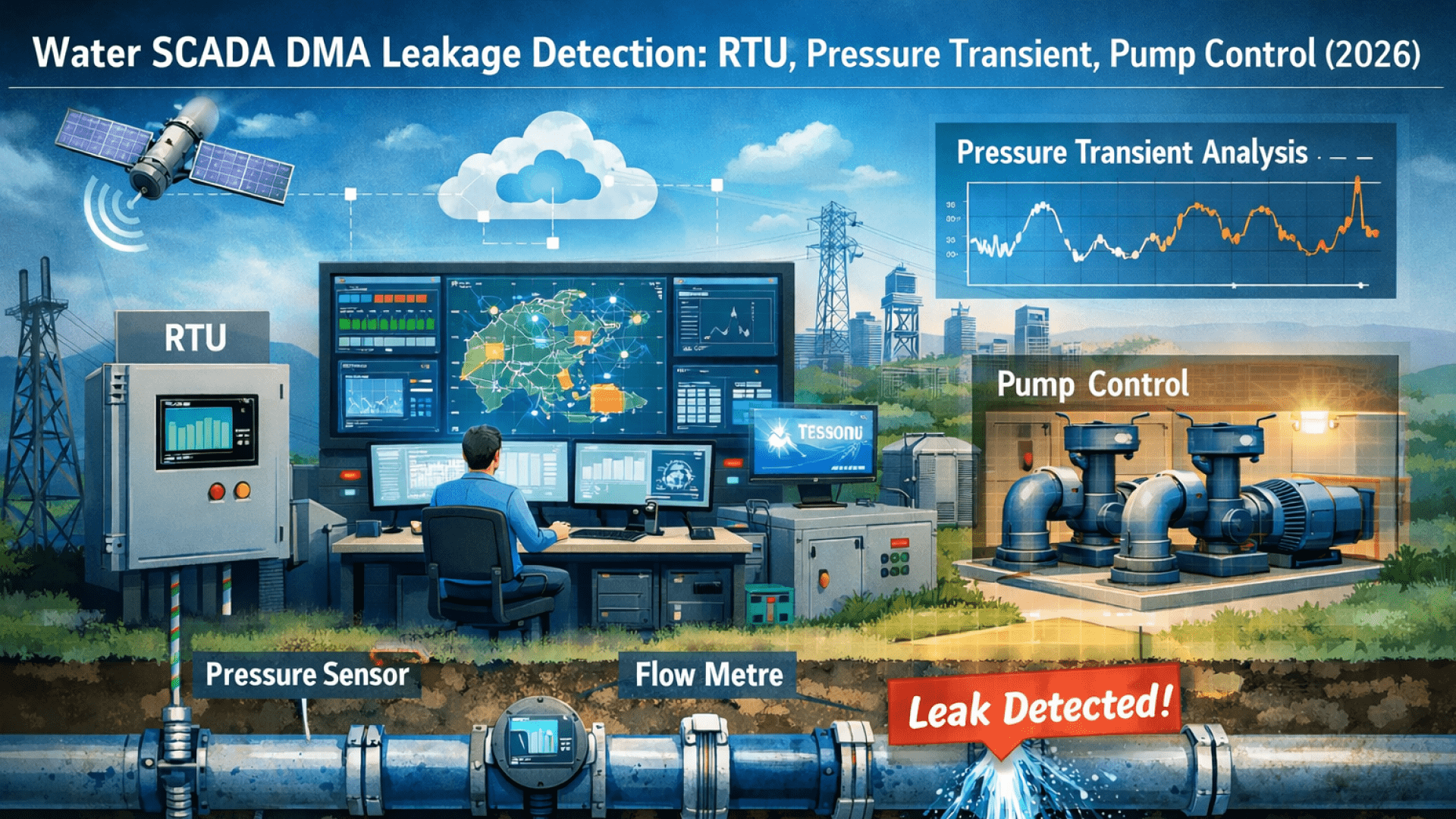
Scenario 2: DMA monitoring and leakage-focused pressure points.
Measurement reliability and time stamping are crucial. RTUs are advantageous for data collection and alarm generation. Accurate recording of pressure threshold violations and sudden drops determines analysis quality.
Scenario 3: Treatment plants with many motors, dosing systems, PID and sequencing.
PLCs are more logical here. Process logic becomes intensive. Operator screens may still be on water SCADA, but the core field control is more stable and readable with PLCs. RTUs can optionally be positioned as a remote communication or data collection layer.
Energy Projects (Substation SCADA)
Scenario 1: Fast and safe control in substations, interlocks are mandatory.
PLCs are strong candidates. Breaker and disconnector logic, interlocks, local operation modes, and situations requiring instant field response are more comfortably managed with PLCs. Substation SCADA serves as the operator interface and recording center, while the control core remains in the field.
Scenario 2: Medium-voltage distribution with many stations, monitoring-focused, possible communication outages.
RTUs excel here. Collecting data from remote cells, storing event records, and transferring them once communication is restored are common requirements. Communication diversity (radio, cellular, fiber) also helps adapt to field conditions.
Scenario 3: Large stations with both intensive control and multiple protocols.
A hybrid approach is often the cleanest solution: PLCs handle field control, while RTUs strengthen the communication and telemetry layer. This prevents control logic from being burdened by communication overhead and keeps SCADA data flow more organized.
A Short Checklist to Quickly Validate the Right Choice
There is no single answer to the “RTU or PLC?” question; the project scenario provides the answer. You can even apply this checklist in a short meeting:
-
Are the stations distributed, or centralized in a single facility?
-
Is control complex (PID, interlocks, sequencing) or mostly monitoring-focused?
-
Is communication stable, or are dropouts frequent?
-
Are you discussing only device cost, or total cost of ownership?
-
Which technology is the maintenance team more familiar with?
-
What is the required reliability level, and how much downtime is acceptable?
To summarize in one sentence: RTUs are stronger for telemetry and remote field applications, PLCs are stronger for fast control and complex logic. The most robust approach is to perform a needs analysis and validate it with a small pilot in the field—because what looks fine on paper does not always behave the same way at a windy remote station.